GASTROGUIDE study

Research into the early detection of metastases in gastric cancer

The GASTROGUIDE study is a research study in patients with gastric cancer. We want to investigate whether a new technique for analysing abdominal (lavage) fluid (using cell-free tumour DNA analysis) is more reliable at finding metastases to the peritoneum (the lining of the abdominal cavity) than the current method (using cytology). We also want to find out whether this new technique can predict the development of peritoneal metastases.

Background

Every year, around 1,000 patients in the Netherlands are told they have gastric cancer. Gastric cancer can cause metastases on the peritoneum that are not always visible on a CT scan. Detecting peritoneal metastases is important in order to draw up a good treatment plan. The abdominal (lavage) fluid is examined for loose tumour cells (cytology). The accuracy of this test for detecting loose tumour cells is limited. This can lead to incorrect treatment choices.

Tumour cells in the body, like normal cells, can die. When tumour cells die, they break apart. This releases small pieces of genetic material (DNA) into the body. We call this cell-free tumour DNA. In a preliminary study, we showed that cell-free tumour DNA can be detected in the abdominal (lavage) fluid of patients with metastases on the peritoneum. In this preliminary study, the new method detected metastases better than the current test (cytology).

Study procedure

Are you taking part in the study? We will follow you for a total of 24 months after the operation and collect your medical data for the purposes of the study.

1. Are you eligible?

Any patient with stomach cancer who will undergo a diagnostic laparoscopy on the abdominal cavity or surgery for stomach cancer is eligible to take part in this study.
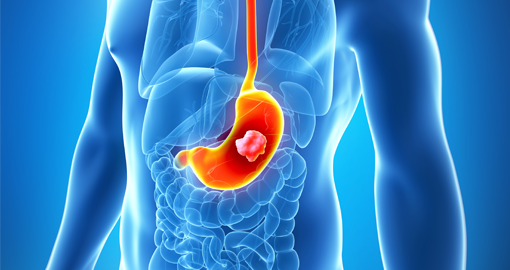
Gastric cancer illustration

2. Collection during the operation

During the diagnostic laparoscopy, abdominal fluid is collected. These samples are examined for hidden metastases from the stomach cancer by means of microscopic examination (cytology). This is all part of standard treatment. We will use the remaining material for cell-free tumour DNA analysis.

Surgical team in the operating room

3. Analysis of abdominal (lavage) fluid

The DNA of the stomach tumour is being sequenced. The DNA of the stomach tumour will be compared with the cell-free tumour DNA in the peritoneal fluid at a later stage. The new test therefore has no impact on your treatment.
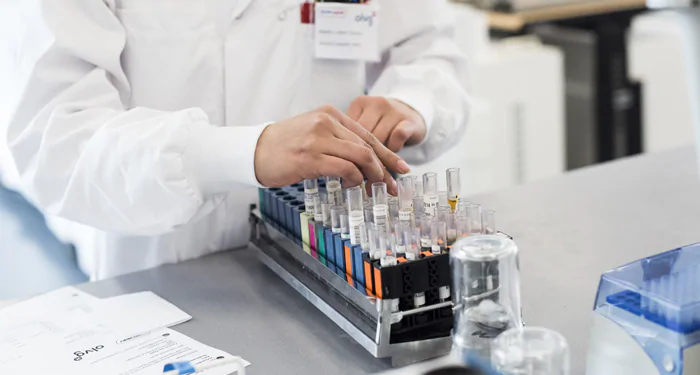
Laboratory sample processing

4. Storage of material and data

Your biological samples (DNA and peritoneal fluid) will be stored in a biobank for at least 25 years so that further analyses relating to this study or other scientific research into stomach cancer can be performed.
Antoni van Leeuwenhoek building

Participants do not have to follow any special rules and do not undergo any additional examinations. For participants in this study there are no additional risks compared with the standard treatment they receive.

Privacy

What does taking part mean for you?

You will not benefit personally from taking part in this study. By taking part, you contribute to research into the right choices in the treatment of gastric cancer.

Your regular treatment will not be changed. Therefore there are no additional side effects, adverse effects or discomforts that you could experience compared with the regular treatment.

If you do not wish to take part

It is up to you to decide whether to take part in the study. Do you not wish to take part? Then nothing will change for you and your treatment.

When does the study end for you

If you yourself wish to stop taking part in the study, you may do so at any time. Please tell your treating physician. You do not have to say why you are stopping.

You will not receive any compensation for taking part in this study.

Your data, material and privacy

We store the following data: your name, your sex, your date of birth, data about your health at the start of the study, medical data that we collect during the study, DNA data of the gastric tumour and other tumour characteristics, and DNA data of the abdominal (lavage) fluid.

To protect your privacy, we give your data and your body material a code. Only this code is put on all of your data and body material. Even in reports and publications about the study, nobody can trace that it was about you.

Your data will be stored for at least 25 years. Your body material will be stored for at least 25 years. As soon as this is no longer needed, we will destroy your body material.

The data and your (remaining) body material collected during this study may also be valuable for other scientific research into gastric cancer. Do you not give permission for this? You can still take part in this study. You will receive exactly the same care.

You can withdraw your permission for the use of your data at any time. Please tell your treating physician.

Next: Frequently asked questions →